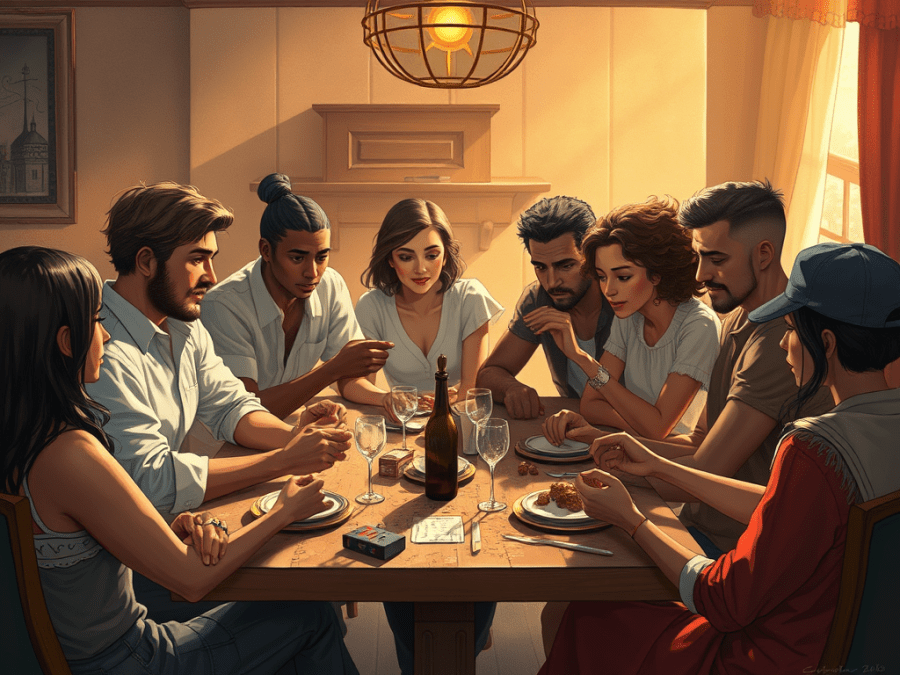
Games People Play… With Hope, With Love, With Friendship, With Betrayal, With Feelings, With Expressions, With Words, With Fear
Human relationships are intricate. They evolve, shift, and sometimes dissolve, often without clear explanations. What makes them so complex isn’t just the people in them, but the silent, subtle games we all end up playing knowingly or unknowingly.
These games are not about manipulation in the obvious sense; they are about protection, expectation, and fear. They are the invisible threads that weave through our conversations, our silences, and our choices. And perhaps, the most profound realization in life is learning to recognize when we’re playing them.
The Game with Hope
Hope is both our strength and our illusion. It keeps us moving when logic tells us to stop. We hold on to hope believing that one more effort, one more day, one more chance will change everything.
But sometimes, we use hope as a disguise a way to delay acceptance. We convince ourselves that holding on is bravery when, in truth, it’s fear of letting go.
And yet, we continue to play this game. Because no matter how fragile hope may be, it gives us comfort and perhaps that’s enough reason to keep it alive.
The Game with Love
Love, by nature, demands vulnerability. But vulnerability feels risky so we play safe. We test love. We protect it too much. We set conditions without realizing that love wasn’t meant to be conditional in the first place.
We say things we don’t mean and stay silent about things that matter. We expect others to read what we don’t express. And when love disappoints us, we pretend it didn’t hurt.
But here’s the truth: love isn’t a game to be played; it’s an experience to be lived. It only grows in honesty and fades in pretense.
The Game with Friendship
Friendship, in its purest form, is effortless. But adulthood often complicates it.
We start playing subtle games of who reaches out first, who remembers, who listens, who withdraws.
Sometimes, we assume silence means distance, when it could simply mean someone is fighting their own battle quietly. We misread absence as neglect, when it might just be exhaustion. True friendship survives these games not because it’s perfect, but because it’s forgiving. It waits. It understands without explanation.
The Game with Betrayal
Betrayal doesn’t always come from enemies; it often comes from those we trusted most.
The real game begins after it happens when we pretend we’ve moved on, when we act strong, when we say “I’m fine.”
We build walls, not realizing we’re also trapping ourselves inside them.
Betrayal changes us not always for the worse, but certainly forever. It teaches us the difference between closure and acceptance.
The Game with Feelings
We are emotional beings, yet we spend so much time hiding our emotions.
We call it control, but often it’s fear. We fear being judged, misunderstood, or appearing weak.
So we play the game we smile when we’re hurting, we nod when we disagree, we pretend indifference when something deeply matters. And slowly, we forget what honesty with ourselves feels like.
But unspoken feelings don’t disappear; they just wait for the right moment, or the right person, to surface again.
The Game with Expressions
Our faces often tell stories that our hearts are afraid to voice.
We’ve mastered the art of wearing expressions that protect us polite smiles, composed looks, measured gestures.
In a world where authenticity feels risky, expression becomes performance.
We act like we’re fine because vulnerability has become uncomfortable currency.
Yet, when someone sees through our act really sees us that’s when connection becomes real.
The Game with Words
Words can build or break, heal or harm.
We use them every day, but not always truthfully. We exaggerate, underplay, or wrap our honesty in politeness.
We apologize without meaning it. We say “it’s okay” when it’s not. We use words to end conversations when we should be using them to start understanding.
The most dangerous words are the ones we never say the ones that linger in our throats, waiting for the courage that never arrives.
The Game with Fear
Fear is the quiet director behind so many of these games.
Fear of being left out. Fear of being replaced. Fear of not being enough. Fear of being too much.
It makes us hold back when we should reach out, and push away when we want to pull closer.
It makes us wear masks even when the room is full of people we trust.
But fear loses its control the moment we name it. When we admit, “Yes, I’m scared,” we stop running from it. And that’s where growth begins.
When the Games End
As we grow older, something shifts. We start craving simplicity fewer explanations, fewer pretenses, fewer games.
We begin to value honesty over impression, connection over convenience.
The truth is, everyone plays these games at some point. It’s part of being human. But life becomes lighter when we recognize them and gentler when we choose to stop.
Because real strength lies not in winning these games, but in stepping out of them.
To speak when it matters.
To express without disguise.
To forgive without pretending.
To love without calculation.
And when we do, life stops feeling like a performance — and starts feeling like peace.
Luv,
KC
 MyLifeGasam